
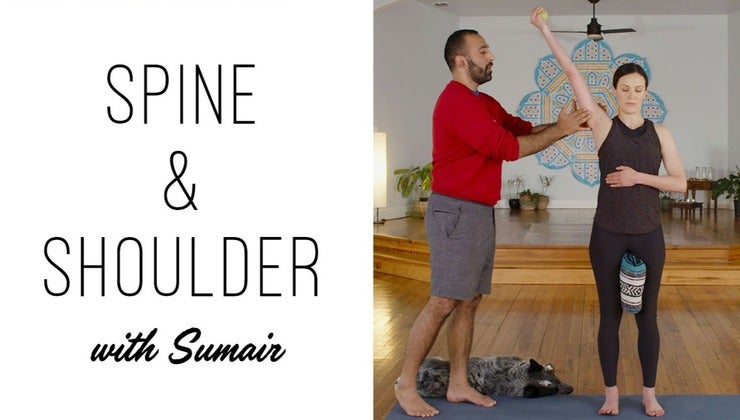
19:08
Spine and Shoulder Mobility to Improve Your Practice with Sumair
video• 19:08• Premium
About this video
Type: video
Duration: 19:08
Access: Premium Content
Permalink: spine_and_shoulder_mobility
Notes List

Woodsy Woods2021-02-15 16:05:36 UTC
I have been having shoulder pain for several weeks now and as a hiker/backpacker this is not only so uncomfortable to live with but it interferes with both my work and my joy. I’ve tried everything I know and was at a total frustration point. THIS is the information I’ve been seeking and I could just about cry. Thank you! I will be diligently working to build my shoulders up the right way!

James Denny2021-05-06 18:47:43 UTC
I am really enjoying and benifiting from this great series with you both. You mention ‘canvas connection’ and that there is a separate practice all about it but I can’t find it. Could you hellp pls.

Nadège Fetter2021-04-15 09:21:48 UTC
Amazing!! I have super hyperflexible shoulders and am always fighting for awareness to keep them from dancing away in any shape😂 this helps a lot, thank you Sumair!!

Robin Soderlund2021-02-27 14:51:49 UTC
Love this!!

Luise 2021-02-22 14:39:10 UTC
Dear Sumair, I am just wondering whether you recommend doing this as some muscular training for the shoulders or is it possible to use this also as some kind of shoulder relief? I am doing Yoga with Adriene every morning but during the day, the sticky points move back into my shoulder, so I need some extra work.

Christine Trauttmansdorff2021-02-12 02:12:30 UTC
It would be helpful to have the side view of the shoulder CAR . Hard to see what's going on. Next time!

Kim McCrory2020-08-19 16:24:03 UTC
Hi! I left a somewhat convoluted comment after Sumair's first video, requesting a "sort-of updated 101 class" that reflects the ques you now give about connection vs. position... Turns out you were already thinking about just that: Basic Ass Shit! Yes, please!
:)

Wendy2020-08-19 13:30:31 UTC
I had done this video once before but hadn’t yet completed the initial video. Having done the connection vs position practice helped so much in understanding the importance of the canvas. This was great. I loved the visualization of the ball in my hand being the shoulder joint. Extremely helpful and beneficial. Thank you both! 🙏🌈

Destiny Langford2020-08-18 22:37:25 UTC
I feel the same way!

Yenyu Lin2020-08-18 17:03:42 UTC
This one is amazing! Felt like been to a massage!
Related Contents

Quick Stats
Content ID#173639
Category#
Typevideo